
Hotel facades come with a built-in advantage: repetition.
Handled well, it becomes rhythm, pattern, and brand identity.
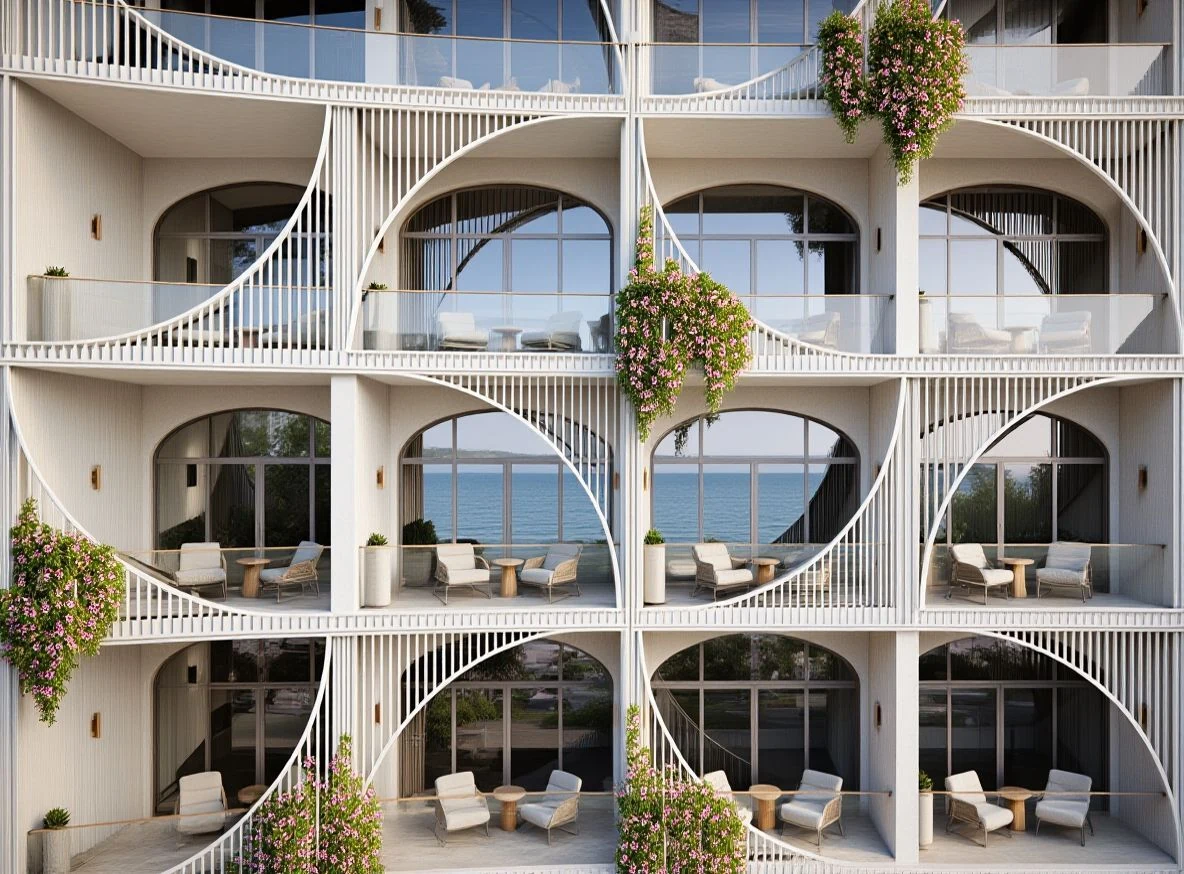
Think about it. Hundreds of identical rooms, stacked one on top of the other. On paper it’s copy-paste. But in design, that’s pure opportunity.
Repetition is like a drumbeat: on its own, it can feel flat. Add one clever twist, and suddenly you’ve got a rhythm people remember. Tilt a balcony. Rotate a frame. Shift a module. Change the angle of sunlight across it.
Suddenly it’s not sameness, it’s a pattern with character. And it doesn’t have to be complex. Some of the smartest facades are born from just one repeated move. Guests don’t notice the repetition anymore; they notice the identity.
Here’s the beauty of it for developers: one smart move is often more cost-effective than dozens of complicated ones. Instead of fighting the repetition, you let it do the heavy lifting. The facade starts telling a story without your budget telling you off.
Instead of fighting the repetition, you let it do the heavy lifting.
And this approach has another advantage: it lets us focus on detail again. Not big sculptural gestures that break the bank, but refined elements, like the crafted details that once defined baroque buildings. Because when the concept is smart and repeatable, you can afford to make the details matter.
And that story pays back. Because in hospitality, the facade is not just a wall. It’s one of the first photos on a booking site. The backdrop of a guest’s Instagram. The silent billboard that markets your hotel 24/7.
Handled poorly, repetition makes a building feel bulky and forgettable. Handled cleverly, it makes the hotel instantly recognizable, even in a skyline full of competitors.
So no, repetition isn’t the enemy of hotel design. It’s the secret ingredient that turns copy-paste into character, detail into brand identity, and identity into real value.